
Choosing the Right Aluminum Alloy for Your Metal Fabrication Project

Pick the wrong aluminum alloy and the job can fight you from the first cut. A part that should bend cleanly may crack. A welded frame may lose strength near the joint. A polished extrusion may look dull after anodizing.
Aluminum is valued because it is light, corrosion resistant, and easy to work compared with many metals. But “aluminum” is not one material. Each alloy has its own mix of strength, formability, weldability, corrosion resistance, and finish quality.
For many fabrication projects, the choice often comes down to four common options: 3003, 5052, 6061, and 6063. Here is how to think through them before ordering sheet, plate, tube, or extrusion.

Start with what the part needs to do
For choosing the right aluminum alloy, begin with the part’s job rather than the alloy name. The best material for a decorative panel may be a poor choice for a structural bracket.
Ask a few practical questions:
Will the part be bent, rolled, deep drawn, or stamped?
Does it need to carry weight or resist impact?
Will it be welded?
Will it face salt spray, chemicals, or outdoor exposure?
Does the finished surface need to look good after anodizing or polishing?
Is the part made from sheet, plate, bar, tube, or extrusion?
Those answers narrow the field quickly. In simple terms, 3003 is easy to form, 5052 handles corrosion and bending well, 6061 is the general-purpose structural choice, and 6063 is often best for attractive extrusions.
3003 works well when forming matters most
3003 aluminum is a non-heat-treatable alloy with manganese as its main alloying element. It is not the strongest option, but it is one of the friendliest alloys for common sheet metal work.
This makes 3003 a good fit for parts that need to bend, roll, or form without cracking. It is often used for:
Sheet metal panels
Light-duty enclosures
Covers and housings
Ductwork
Tanks for non-critical applications
Decorative or utility parts
3003 also has good corrosion resistance for many indoor and mild outdoor uses. It welds well and is generally easy to cut and fabricate.
The tradeoff is strength. If the part needs to carry a heavy load, hold threads under stress, or resist repeated impacts, 3003 may be too soft. It can dent more easily than stronger alloys.
Choose 3003 when the design values formability, workability, and moderate corrosion resistance more than high strength.
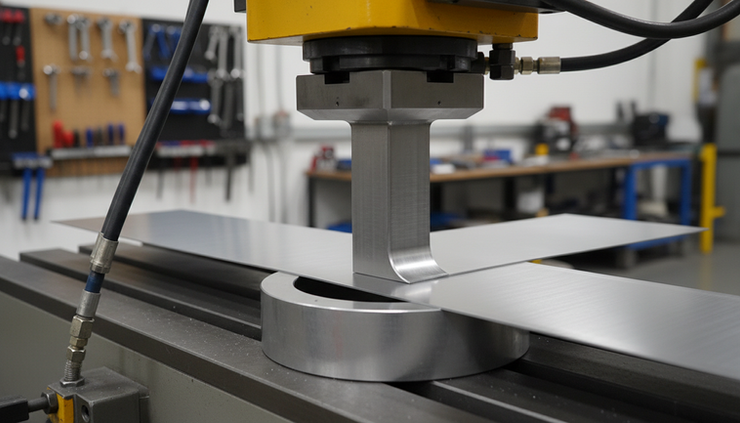
5052 is a strong choice for corrosion resistance and bending
5052 aluminum is also non-heat-treatable, but it contains magnesium, which gives it more strength than 3003. It is known for a useful mix of good formability, good fatigue resistance, and excellent corrosion resistance, especially in marine and wet environments.
Common uses include:
Marine panels and boat parts
Fuel tanks and other formed tanks
Outdoor cabinets
Electrical enclosures
Trailer and truck components
Food and chemical handling equipment, when the application is suitable
5052 bends well, especially compared with many stronger heat-treated alloys. For sheet metal projects that need both shape and durability, it is often the safer pick.
It also welds well. Because it is not heat-treatable, it does not rely on a T6 heat-treated temper for its strength in the same way 6061 does. That can make welded assemblies more predictable when the design does not require very high structural strength.
The tradeoff is machinability. 5052 can be machined, but it is not usually the first choice for tight, detailed machining work. It can feel gummy compared with 6061.
Choose 5052 when the part will see moisture, salt air, vibration, or repeated bending stress.
6061 is the general-purpose structural alloy
6061 aluminum is one of the most widely used fabrication alloys in the United States. It contains magnesium and silicon and can be heat treated for higher strength. The common T6 temper offers a strong balance of strength, machinability, corrosion resistance, and availability.
6061 is used for:
Structural frames
Machine parts
Mounting plates
Brackets
Base plates
Welded assemblies
Tubing and bar stock components
If a project needs a practical all-around aluminum, 6061 often ends up on the shortlist. It machines better than 3003 and 5052, holds features well, and is available in many forms, including sheet, plate, bar, angle, channel, and tube.
It also welds well, but there is one key point to remember. Welding can reduce strength in the heat-affected zone, especially in T6 material. For highly loaded welded parts, the design may need larger weld areas, thicker material, post-weld heat treatment, or engineering review.
6061 can be bent, but it is less forgiving than 3003 or 5052, especially in harder tempers. Tight bends may crack if the bend radius is too small or the grain direction is ignored.
Choose 6061 when the part needs strength, machining performance, and broad availability.

6063 is made for extrusions and clean finishes
6063 aluminum is often called an architectural alloy because it extrudes well and produces an attractive surface finish. It is commonly used for shapes that need smooth lines, consistent dimensions, and an anodized appearance.
Typical uses include:
Window and door frames
Trim pieces
Rails
Display frames
Heat sink shapes
Decorative tubing
Custom extruded profiles
Compared with 6061, 6063 usually has lower strength, but it often wins on appearance and extrudability. It can form complex profiles with thinner walls and smoother surfaces, which matters for visible parts.
6063 also anodizes well. If the finished part needs a clean, even look, especially in clear or colored anodized finishes, 6063 may be a better option than 6061.
The tradeoff is load capacity. For heavy structural work, 6061 is usually a better starting point. For visible extruded parts where appearance and shape matter most, 6063 is often the better fit.
Choose 6063 when the project needs custom profiles, smooth surfaces, and attractive anodized finishes.
A quick comparison of 3003 5052 6061 and 6063
The alloys 6061, 6063, 5052, 3003 overlap in some areas, but each has a natural lane.
Alloy | Best at | Watch out for |
3003 | Forming, light sheet metal work, general corrosion resistance | Lower strength and dent resistance |
5052 | Marine resistance, bending, welded sheet assemblies | Less ideal for detailed machining |
6061 | Structural parts, machining, general fabrication | Welded T6 areas may lose strength |
6063 | Extrusions, trim, anodized appearance | Lower strength than 6061 |
A good rule of thumb is simple. Use 3003 for easy forming, 5052 for formed parts in tougher environments, 6061 for stronger machined or structural parts, and 6063 for attractive extruded shapes.

Match the alloy to fabrication before buying material
Material choice affects more than the final part. It affects cutting speed, tooling, bend radius, weld planning, finish quality, and scrap rate.
Before ordering, confirm:
The required temper, such as H32 or T6
Minimum bend radius for the thickness
Weld filler compatibility
Surface finish requirements
Whether the part needs sheet, plate, bar, tube, or extrusion
Any engineering or code requirements for the application
When in doubt, ask the fabricator early. A small alloy change can make the difference between a part that runs cleanly and one that causes avoidable rework.
The right aluminum alloy is the one that fits the part’s real job. Start with function, then balance strength, forming, welding, corrosion resistance, and finish. That approach keeps the project practical from the first cut to the final assembly.


Comments